This section of my portfolio highlights the work I did on Ashes of Creation, a 2025 open-world MMO with over 300k copies sold on Steam and a peak concurrency of 31k players during its early access preview.
The chapters below outline my approach to narrative and content design within a live service game world, spanning hands on implementation, systemic content development, and lore driven worldbuilding. Each chapter focuses on a different layer of the work, including scripting gameplay events, setting up scenes, designing and exploring quests, tracking character personalities to craft dialogue in evolving storylines, applying narrative standards to preserve consistency, and building cohesive worlds that support both narrative intent and player agency.
Overall, the work shown here captures the realities of designing for a world in constant motion, where story continuity must adapt to how player-driven progression shapes the fate of each realm.
Chapters
Scripting Gameplay Events
Looking through the lens of a dynamic world.
The examples that follow illustrate how I scripted gameplay logic to structuring event flow. Implementing events began directly in engine, using tools we coordinated with engineering. I was personally responsible for defining event beats, setting up triggers and fail states, and ensuring events scaled across different player populations while remaining clear and readable in moment-to-moment play.
“Splendid! I suspected you might be agreeable. Unarmed as I am, I’d be most obliged if you carried this package to its destination.” - Swarby the Porter
This early prototype demonstrates a scripted gameplay event triggered through conversation with a stranded caravan driver. After confronting the highwaymen who are barring passage across the bridge, the player returns to the polite and ironic porter, who can then safely continue his journey. If the player chooses, the encounter can extend into an optional follow-up quest involving the express delivery of a package.
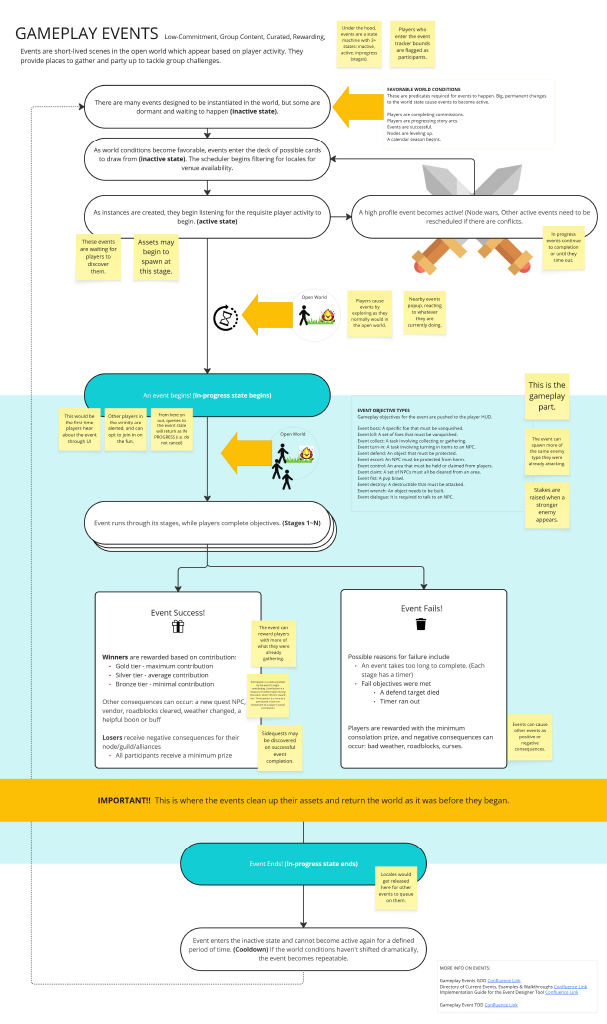
The diagram shown here is a one-pager document used for onboarding event designers and collaborators to the feature. It summarizes the typical gameloop of an event's lifetime as when it is scheduled to occur. Download PDF
The visual aid illustrates how the player experience (highlighted in teal) is supported by scripted conditionals, state checks, and triggers that define a clear sequence of gameplay objectives. At a broader level, it shows how this instance of the event interfaces with the server authority to validate state, manage concurrency, and dynamically curate content in response to player demand.
In the video above, I am using a test environment on a live event to debug asset persistence, netwoking, and objective state. Compared to local quests, which are scoped to individual player characters, events are globally instantiated and shared across clients. This test validates a multi-client scenario to ensure the event state updates correctly across server boundaries, while also verifying that required assets are not incorrectly culled or despawned for performance.
Gameplay events were designed to create reactive moments that feel grounded in the world and responsive to player action. I approach event design by defining clear narrative context and player-readable goals, then implementing events through scripted logic, state tracking, and fail conditions that support multiple outcomes. My focus was on building events that scale across player behavior, reinforce world state, and function as reusable systems within a live service environment.
Setting up a Scene
Ambient characters add life to a stage.
Ambient characters and props are the connective tissue that make a scene feel inhabited rather than staged. Background NPCs, idle behaviors, environmental set dressing, and interactive objects provide quiet signals about what happened here, what’s happening now, and what the player should care about, often without a single line of dialogue. As narrative tools, these elements add context by reinforcing tone, stakes, and world state through observation. When placed intentionally, ambient characters and props turn space itself into a storyteller, grounding gameplay moments in a believable, living world. In practice, this effort depended on tight coordination and ongoing collaboration across disciplines.
In the first video I am recording a run-through of the Hammer Rest POI prior to the Alpha 2 release. I have set up the scene with requests for set dec and several ambient NPCs to provide atmospheric support for the player hub.
Back in the test level, here's a video sample where I am demonstrating to animators how to setup a spawned NPC so they can use an isolated environment to screen idle animations which are running on ambient NPCs.
This work demonstrates how close collaboration across disciplines creates a high-quality stage where narrative can unfold. By aligning narrative intent with ambient characters and props, the systems work together to support story without overwhelming gameplay. The result is an environment where narrative emerges organically through play and observation.
Tracking Characters
"Something is moving out there. Quick… and heavy." - Firekeeper Kelori
"The smoke curls inward. Signals trouble stirring along the banks," says Firekeeper Kelori as she hands you the reins of an Anvilhorn Ram. The Firekeeper is one of many memorable characters players encounter during their first impression of the game, setting the tone for a world that feels watchful, inhabited, and alive with danger just around the corner.
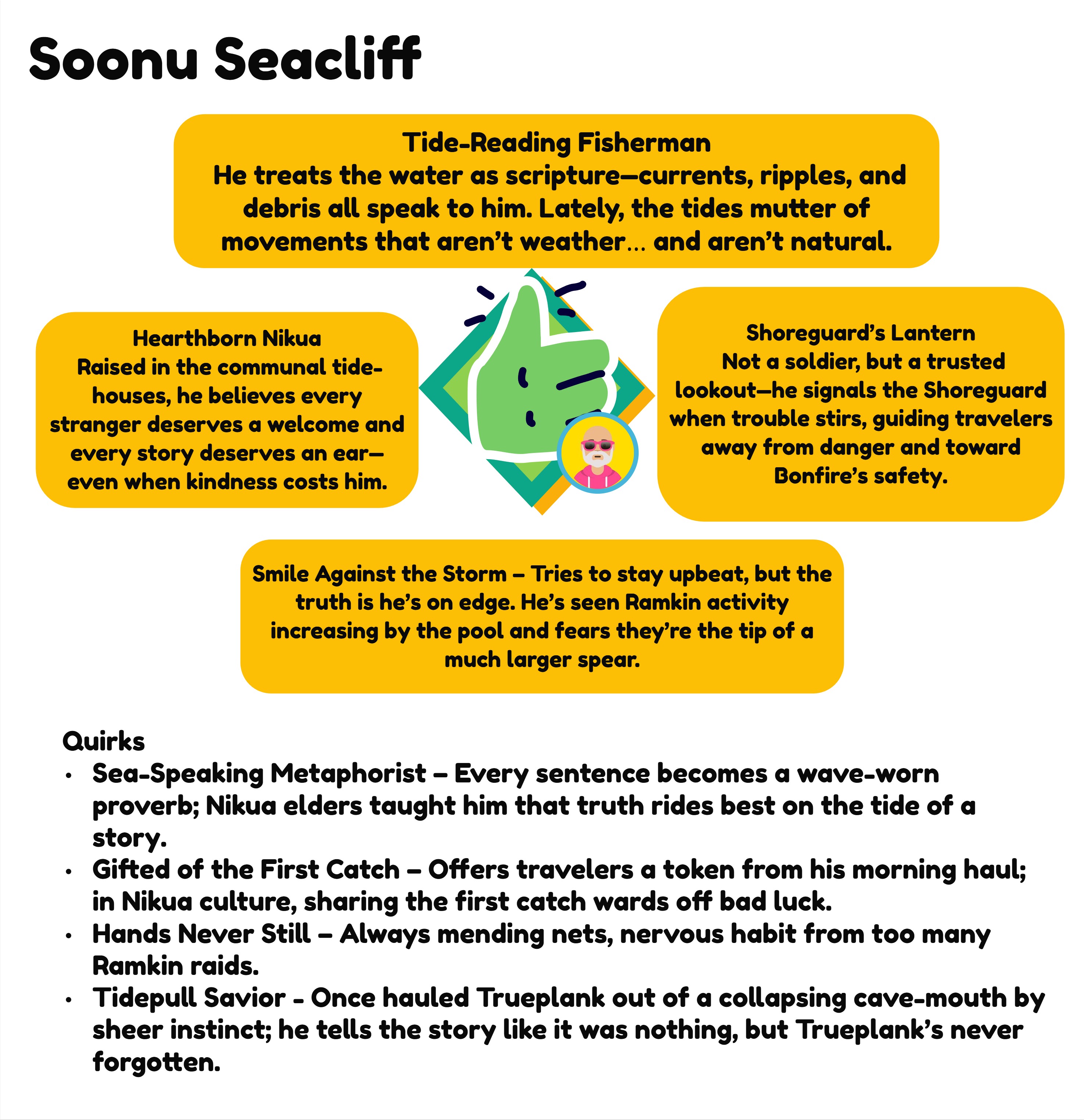
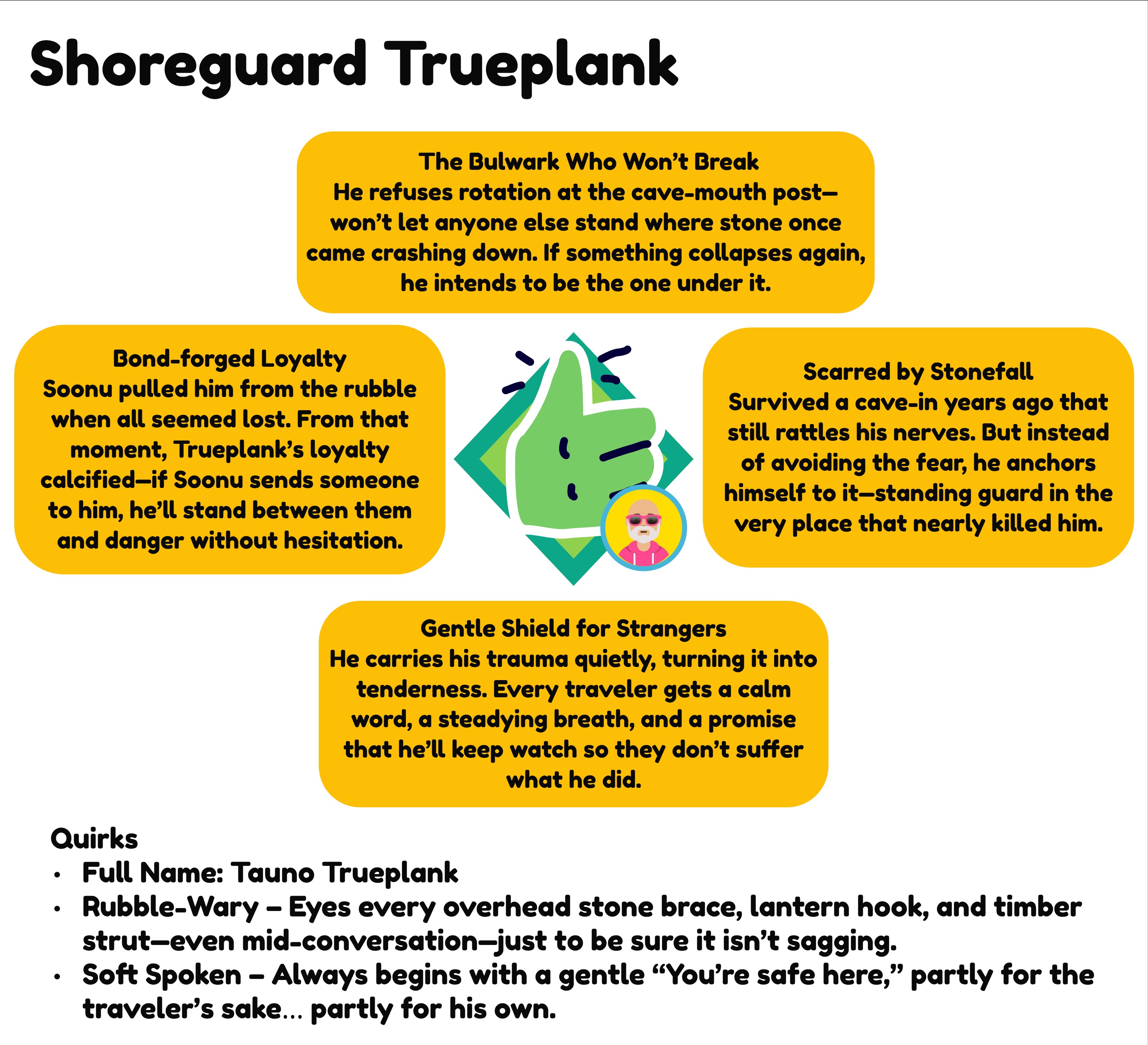
With the guidance of Bill Trost, Designer Director at Intrepid, I co-wrote the FTUE player experience for players starting out in the Anvils, the dwarven home portal.
In this vignette we set up a bond of loyalty between two characters, Soonu Seacliff and Shoreguard Trueplank, who guide the player along an introductory path between where they initially arrive and the first quest hub, Bonfire Village.
These character diamonds inform their written dialogue, which serves two purposes:
Introduce players to the early mechanics of the game.
Begin the player's journey through the narrative.
Adhering to the personality traits of the Nikua (coastal dwarves), I rely on metaphors of the sea and shoreline to ground the narrative in a believeable culture.
The approach reinforces their cultural identity and allows their unique character to shine through. Rather than exposition, I use dialogue to teach the way of life in Bonfire.
By weaving these metaphors consistently across interactions, the settlement’s narrative voice remains cohesive and immediately recognizable.
Exploring Quests
Foundations in quest/mission design.
Below are a few examples that illustrate how I approach quest design as both a narrative and systems-driven discipline. Each example highlights how I consider player motivation, readability, and pacing while designing quests that feel grounded in the world and responsive to player choice. Together, they reflect my focus on creating quests that integrate cleanly with surrounding systems, support emergent play, and contribute meaningfully to the player’s journey.
Here, I am demonstrating a block out for the quest “A Stolen Hour,” which introduces key beats in the story “Forgone Conclusions,” a supplementary questline made available during the Harbinger world event.
In this video I am demonstrating the NCS narrative tool, which we used to not only build our branching questlines, but also to troubleshoot any breaks in the quest chain and repair them with the debug feature.
Quest implementation required careful planning, confident pitches, and constant iterative work. Once they were blocked, they were further modified to improve dialogue and then maintained when new features were continuously added to our toolset.
Fetching Standards
Adapting commissioned content to established narrative standards to deliver a consistent player experience.
During development, the narrative team iterated through multiple versions of our writing standards and guidelines. Early on, commissions posted at adventuring boards followed a strict format centered on NPC flavor quotes. This approach was later revised in favor of shorter, more readable descriptions, with a stylistic direction inspired by news headlines on a bulletin board. Here are some sample snippets:
Sample A
"I've seen them take to our stables and drink the blood of our horses." - Gatewatcher Stonerim
"Leave it to me. If it bleeds oil, then I know to take it apart." - Bella Crux, Arcane Engineer
"My beard! They're golems, Remlin, not Exalted souls. Stop being sentimental and dismantle their elemental core." - Geni Rimsteel, Ironguard Recruit
"These rocks move to a different beat. Perhaps they no longer hear the heart of Dun." - Runesinger Maile Lua
"Grant us the blade and the blessing. If Vyra's beloved creatures block the path to restoration, let her authority be swift—and pitiless." - Prior Airona, Shorebreak Expedition
Sample B
Minotaur herds have settled in nearby forested areas, endangering travelers and Anvils wildlife.
A waterway has ruptured near the Surge Conduit, where oozes have emerged from the leakage.
Bandits plague the mountainside, threatening to cut off essential trade routes.
Several reports claim that Basilisks are putting unsuspecting travelers at risk of petrification.
Bandits have been sighted near the collapsed tomb, desecrating the dead and stealing valuables.
An overflowing conduit gathers Grem to its fetid waters, creating a nuisance and a potential hazard.
Strictly adhering to established standards and guidelines ensures that content remains readable, scalable, and cohesive as a game grows. Consistency in tone, structure, and presentation helps players intuitively understand what they’re engaging with, reducing friction and reinforcing trust in the experience. By aligning creative work to shared standards, teams can iterate efficiently while delivering a unified world that feels polished at every touchpoint.
Building Worlds
Cosmetic shop items aligned with established tone and lore.
Over the course of development I designed dozens of cosmetic skins sold in the in-game shop and on the Ashes of Creation website. This included mounts, pets, weapons, outfits, gear pieces, vehicles, and freehold building skins.
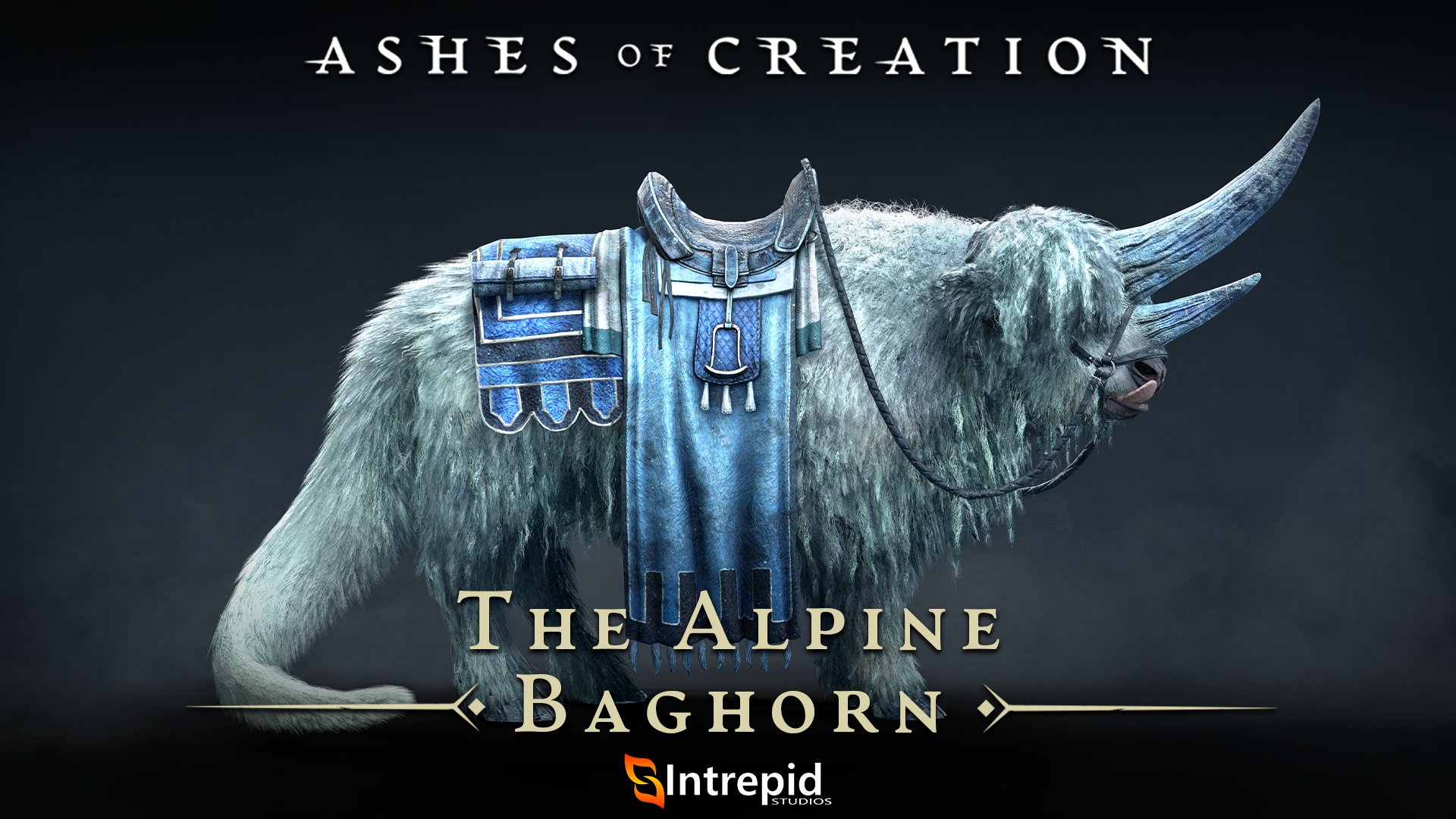
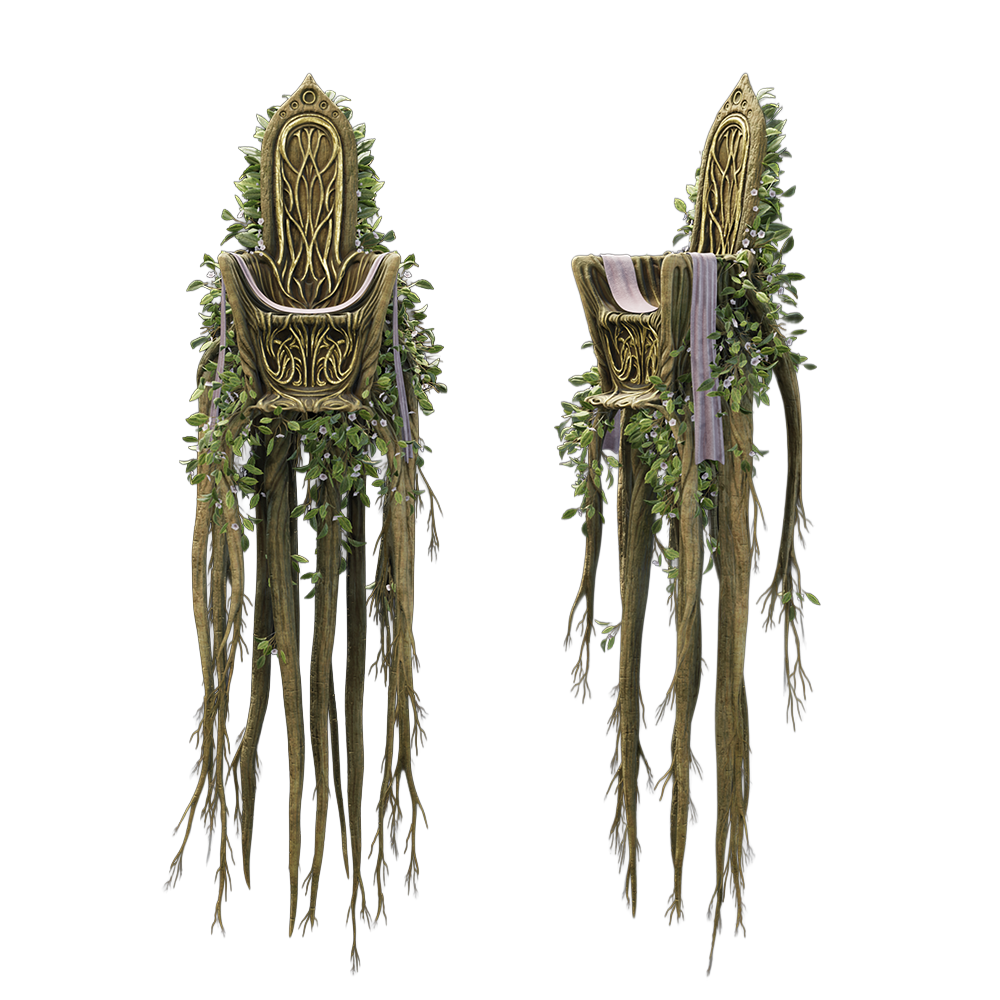
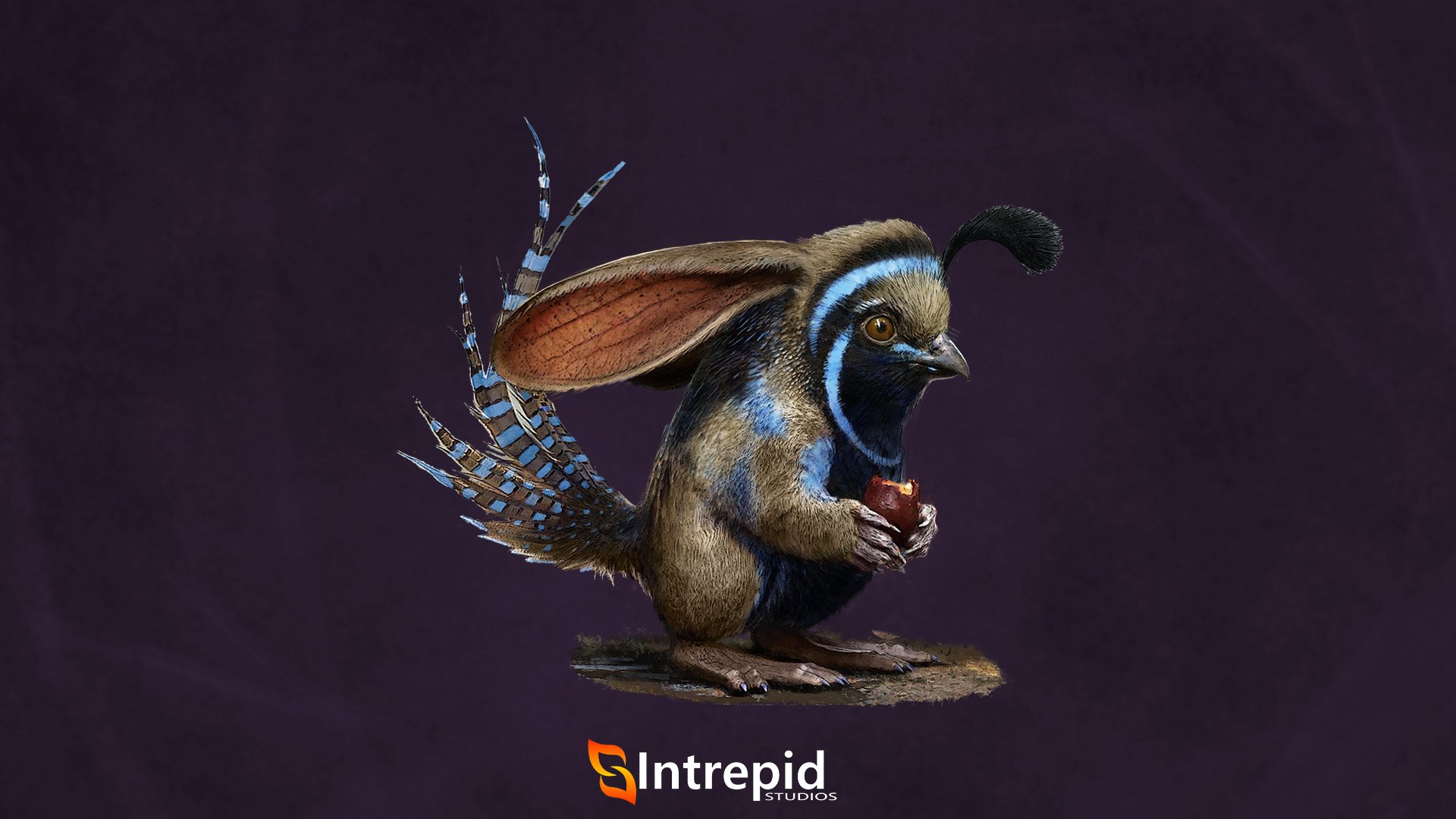
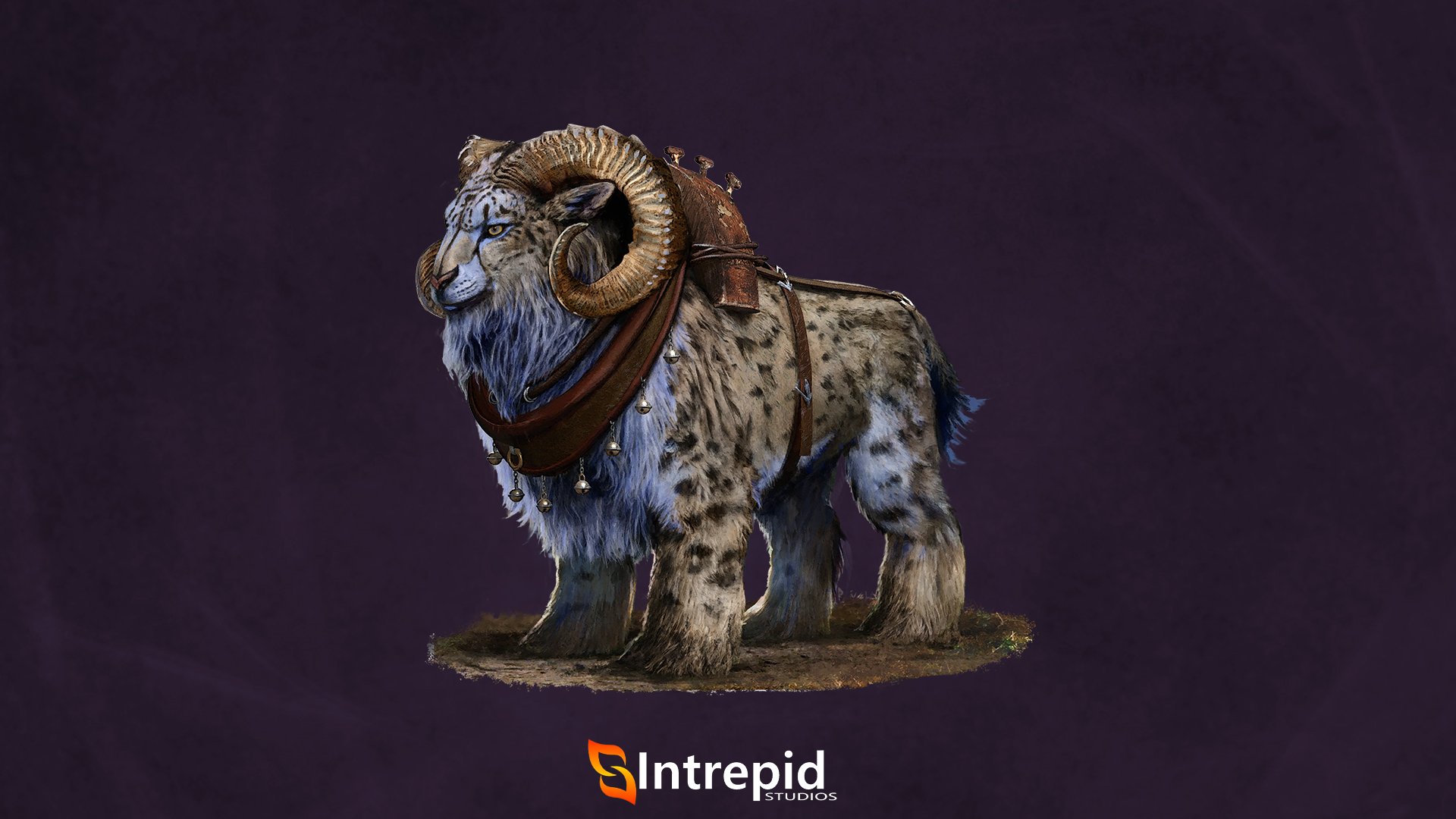
The cosmetics chapter underscores my belief that every player-facing element, from visual customization to narrative content, contributes to how a world is understood and inhabited. With the correct treatment, cosmetics can reinforce identity, tone, and immersion. This portfolio reflects my commitment to building cohesive, scalable experiences through thoughtful systems, disciplined standards, and close cross-disciplinary collaboration, always with the player’s experience at the center.